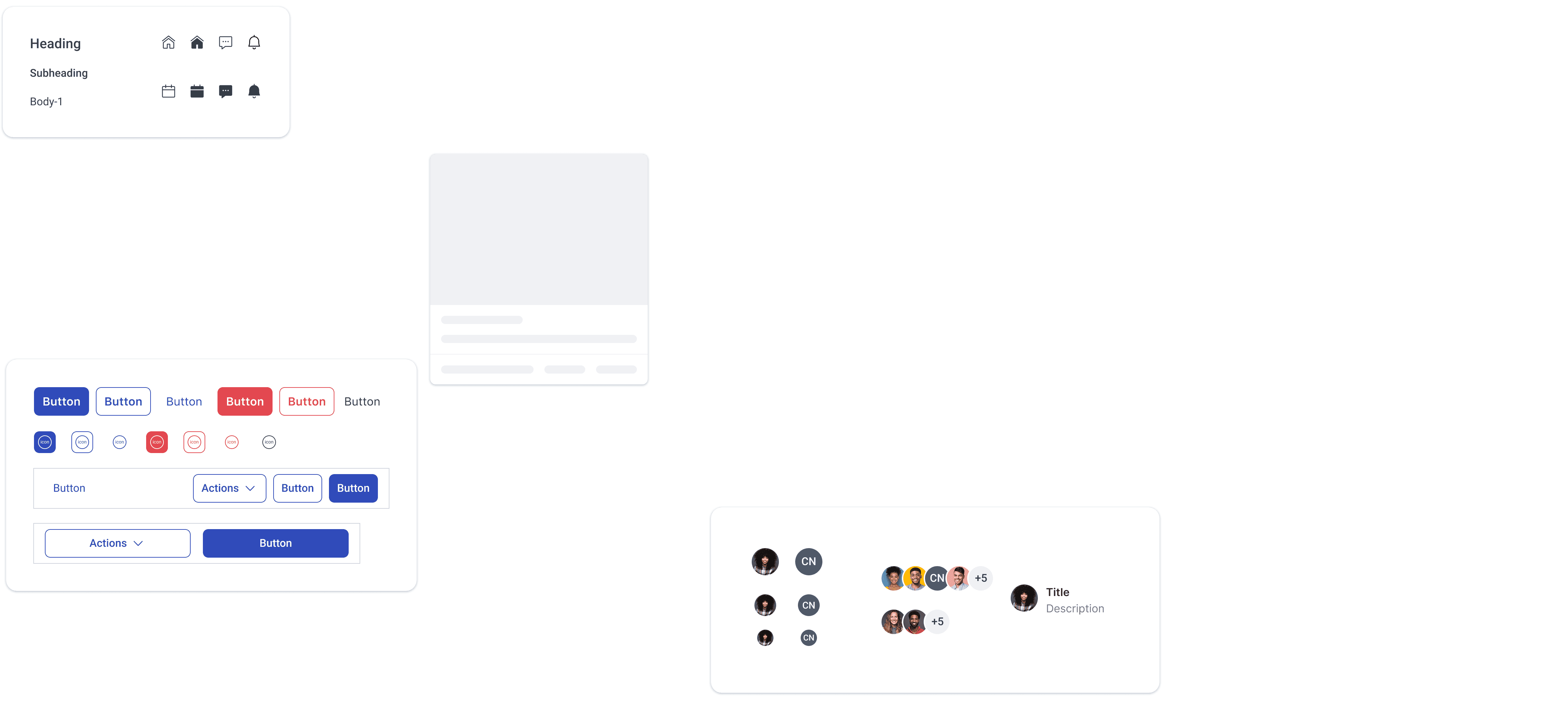


Building a robust Design System
Creating consistency, scalability, and harmony across platforms
When I joined WorkJam, the design landscape was fragmented. Our Web, Android, and iOS applications looked and behaved like three completely different products. Colors were hardcoded, icons were inconsistent, and typography varied from screen to screen. There was no single source of truth, every update required redundant effort across teams, slowing us down and diluting the brand experience.
This challenge became an opportunity: to build a unified and robust Design System that would align every product touchpoint, empower designers and developers, and scale as WorkJam continued to grow.
I started by identifying the core visual inconsistencies and creating a foundational UI kit. This initial step focused on aligning the essential building blocks of our design language:
A cohesive color palette, built around accessible and brand-consistent tones.
A unified iconography set, replacing hundreds of hardcoded icons with a single, scalable library.
A typographic scale that balanced readability, hierarchy, and platform parity.
This foundation became the DNA of what would grow into the full Design System.

Once the visual language was defined, I began translating it into reusable components. Every component was designed to be flexible, responsive, and accessible, ensuring designers and developers could build quickly while maintaining consistency.
Over time, this evolved into a comprehensive library of over 30 components, covering everything from buttons and inputs to complex modals and data tables.
Each component was documented with:
Clear usage guidelines and best practices.
States, variants, and accessibility rules.
Token-based references for easy handoff to engineering.
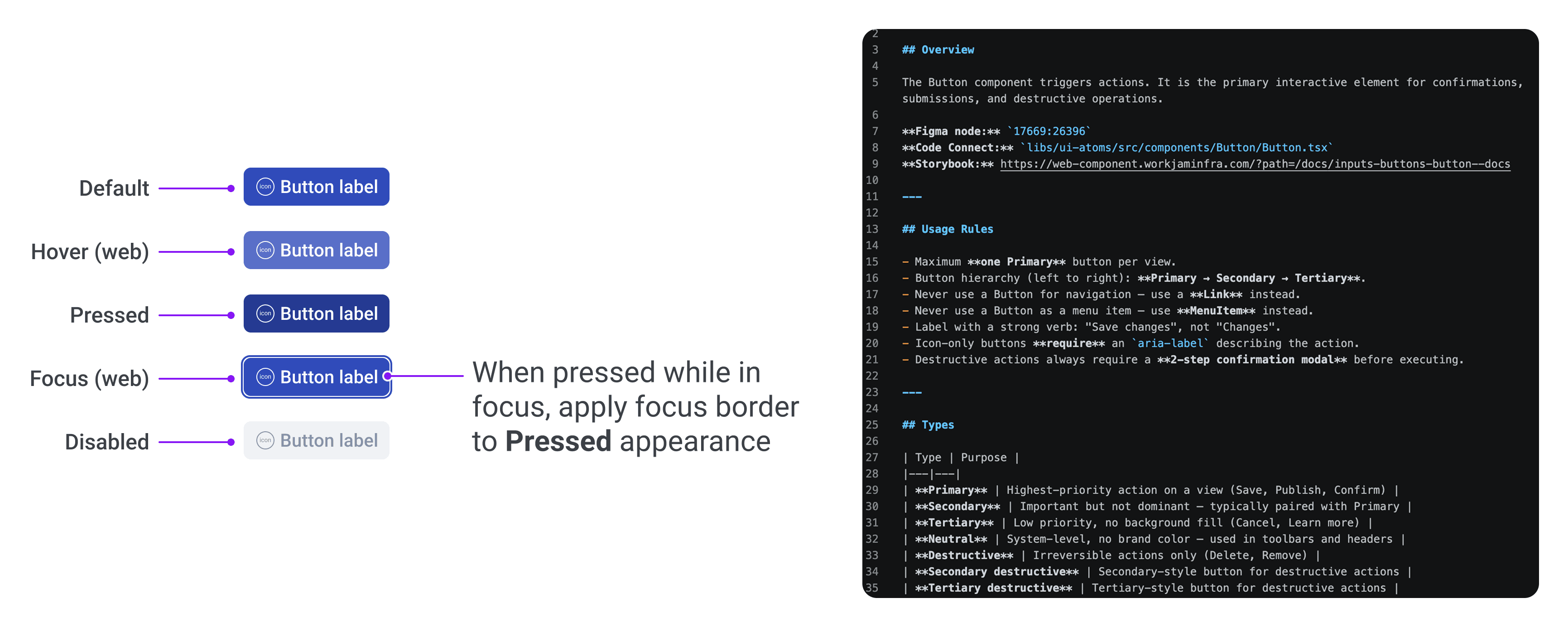
As the system matured, scalability became a key focus. With the help of one engineer and the design ops we introduced design tokens to standardize and scale across platforms, ensuring our Web, Android, and iOS products spoke the same visual language.
“Introducing design tokens was the turning point that transformed our Design System from a static library into a scalable, cross-platform framework.
Tokens were implemented for:
Color => consistent palette for themes and dark mode.
Typography => shared text styles across all platforms.
Icons => single icon set mapped to token references instead of hardcoded assets.
This token-driven approach not only simplified implementation but also enabled future-proof flexibility, changing a single token could update hundreds of components instantly.
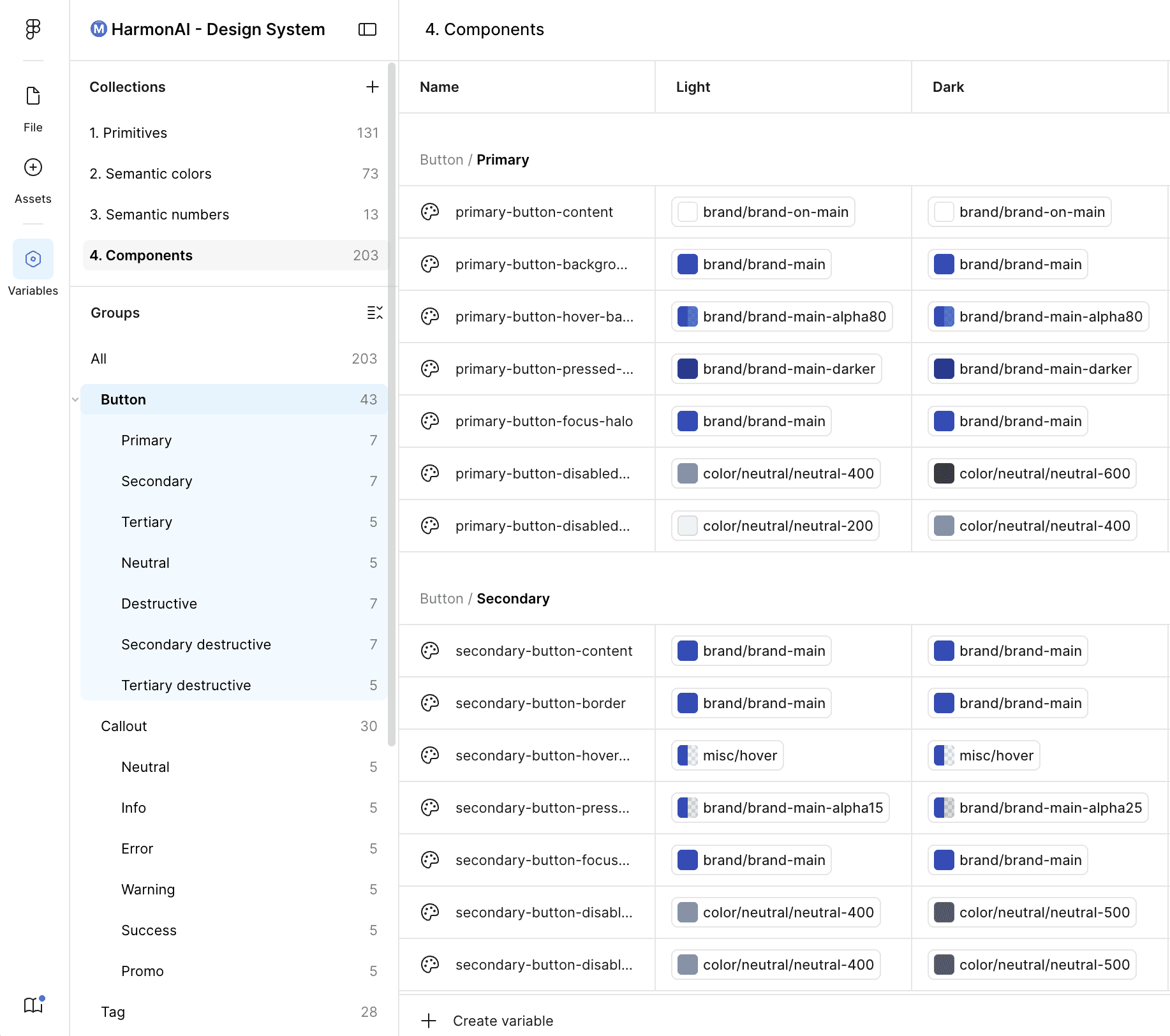
From Figma variables
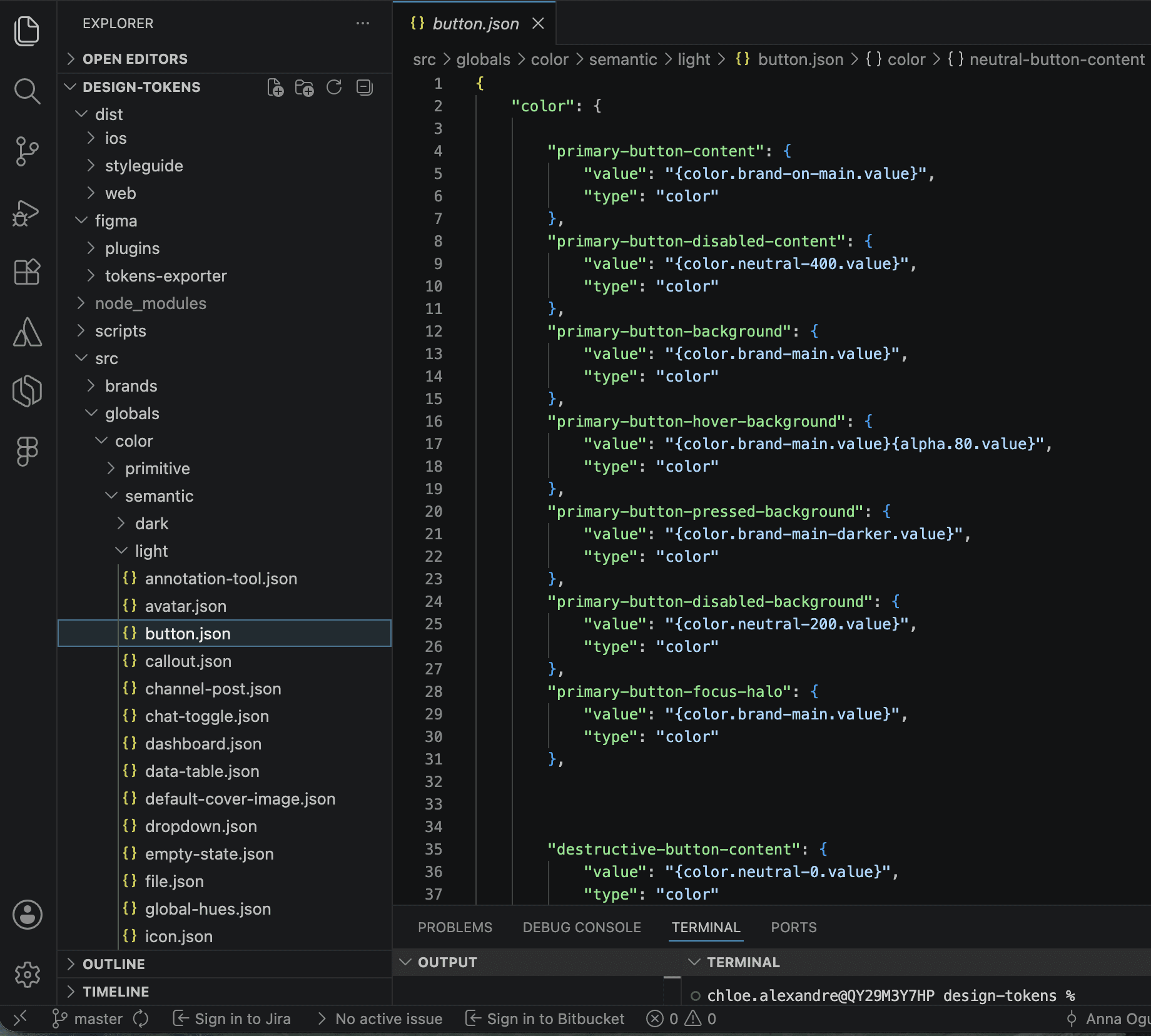
To prod tokens
As the Design System expanded, I took on the role of Design System Lead, managing its growth and adoption across teams. I collaborated closely with product designers, engineers, and QA to ensure consistency, usability, and maintainability.
Key responsibilities included:
Establishing version control and change management for the Design System.
Running workshops to onboard designers and ensure adoption.
Setting up feedback loops for continuous improvement.
This collaborative process transformed the Design System into a living product, not just a static library.
Today, I’m leading its next evolution by exploring and integrating AI-powered workflows into the Design System process. From accelerating component documentation and content generation to improving consistency and scalability across design operations, AI is becoming a powerful extension of the system itself.
By combining structured design systems with AI-driven workflows, we’re building a smarter, faster, and more adaptive design process for the future.
The introduction of WorkJam’s unified Design System transformed both the design workflow and the user experience:
A consistent and recognizable UI across all platforms.
Faster design-to-development handoffs and reduced implementation errors.
Improved accessibility and scalability across multiple devices.
Stronger brand identity and design efficiency at scale.
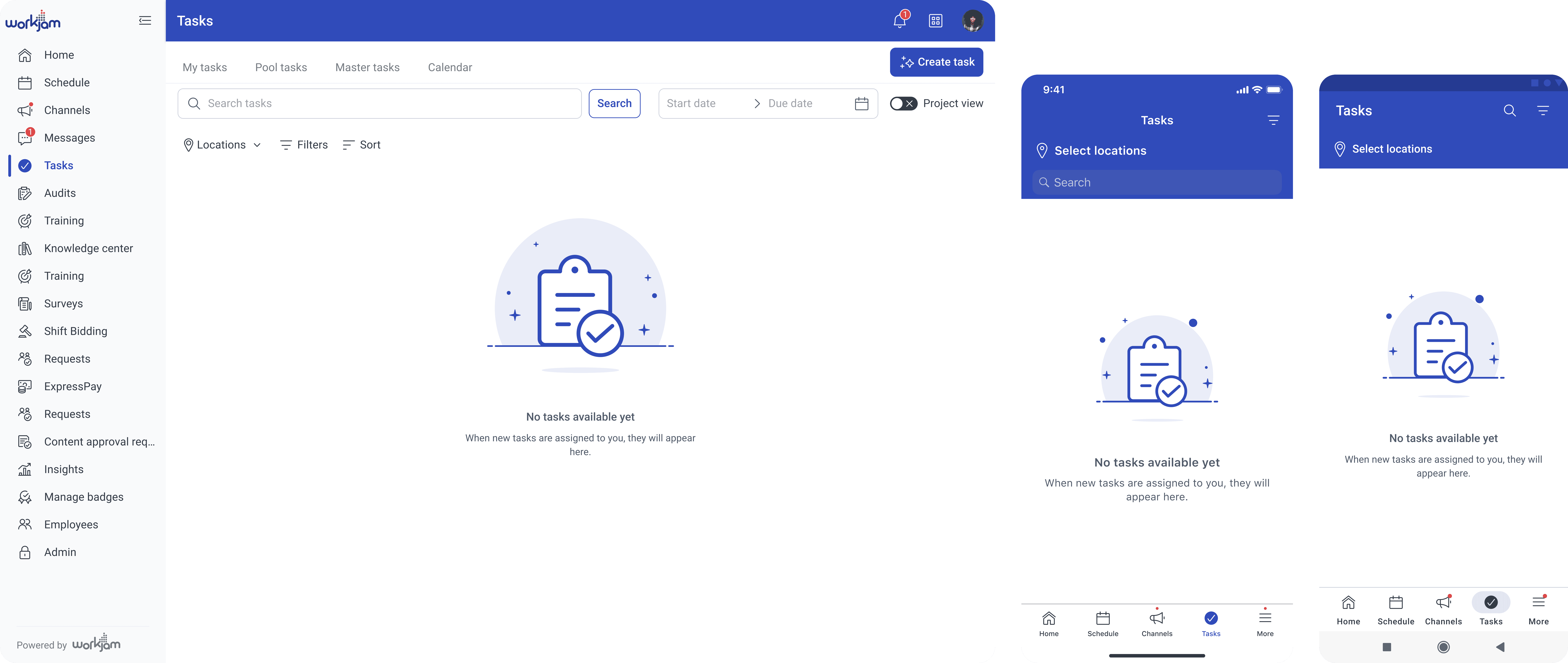
This project taught me the importance of system thinking in design, building for both consistency and change. Creating a Design System isn’t just about components and colors; it’s about enabling teams to move faster with clarity and confidence.
As WorkJam’s design ecosystem continues to grow, the system we built provides a strong, scalable foundation for everything to come. :)