Revamping WorkJam’s Schedule Module
Simplifying complexity and empowering users through clarity and responsive design.
When I joined the project in 2022, WorkJam’s Schedule module (one of the platform’s most used features) had become difficult to use and maintain. It was complex, not responsive, and visually cluttered, making it hard for users to identify shifts, breaks, time-offs and important schedule information.
Together with the squad team, I led the redesign of this core experience, focusing on usability, accessibility, and clarity to deliver a modern, intuitive, and scalable scheduling tool for our users.
The first step was a deep-dive into how users, frontline employees, interacted with the existing schedule. Through interviews, user testing, and internal feedback, we identified the most pressing issues:
Complex interactions: too many steps to perform basic scheduling actions (like releasing a shift or submit a request).
Poor responsiveness: the layout broke down on smaller screens, limiting mobility.
Low visual clarity: shifts, breaks, time-offs were difficult to distinguish.
By mapping these pain points, we built a shared understanding of the user journey and defined clear objectives for the redesign.
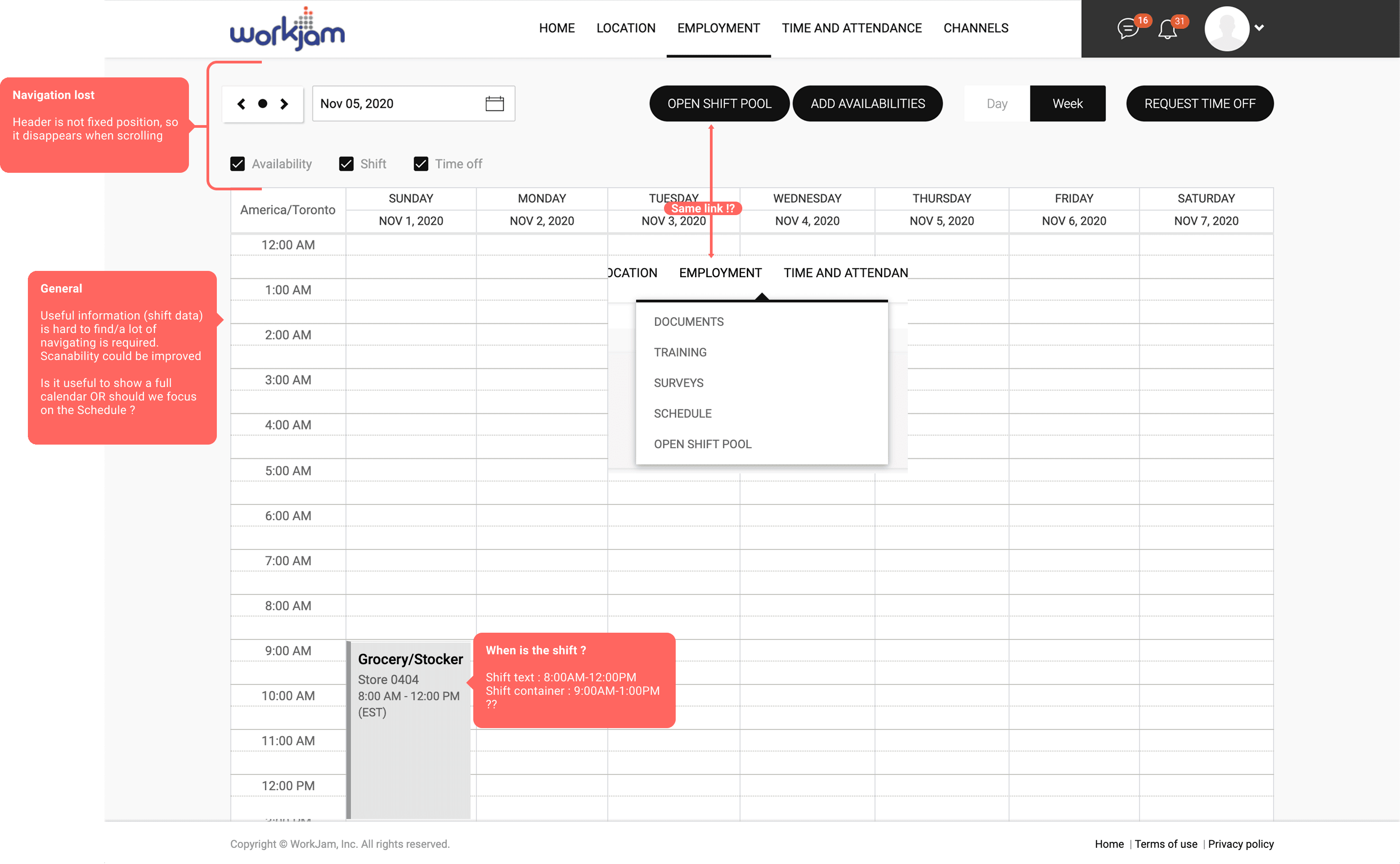
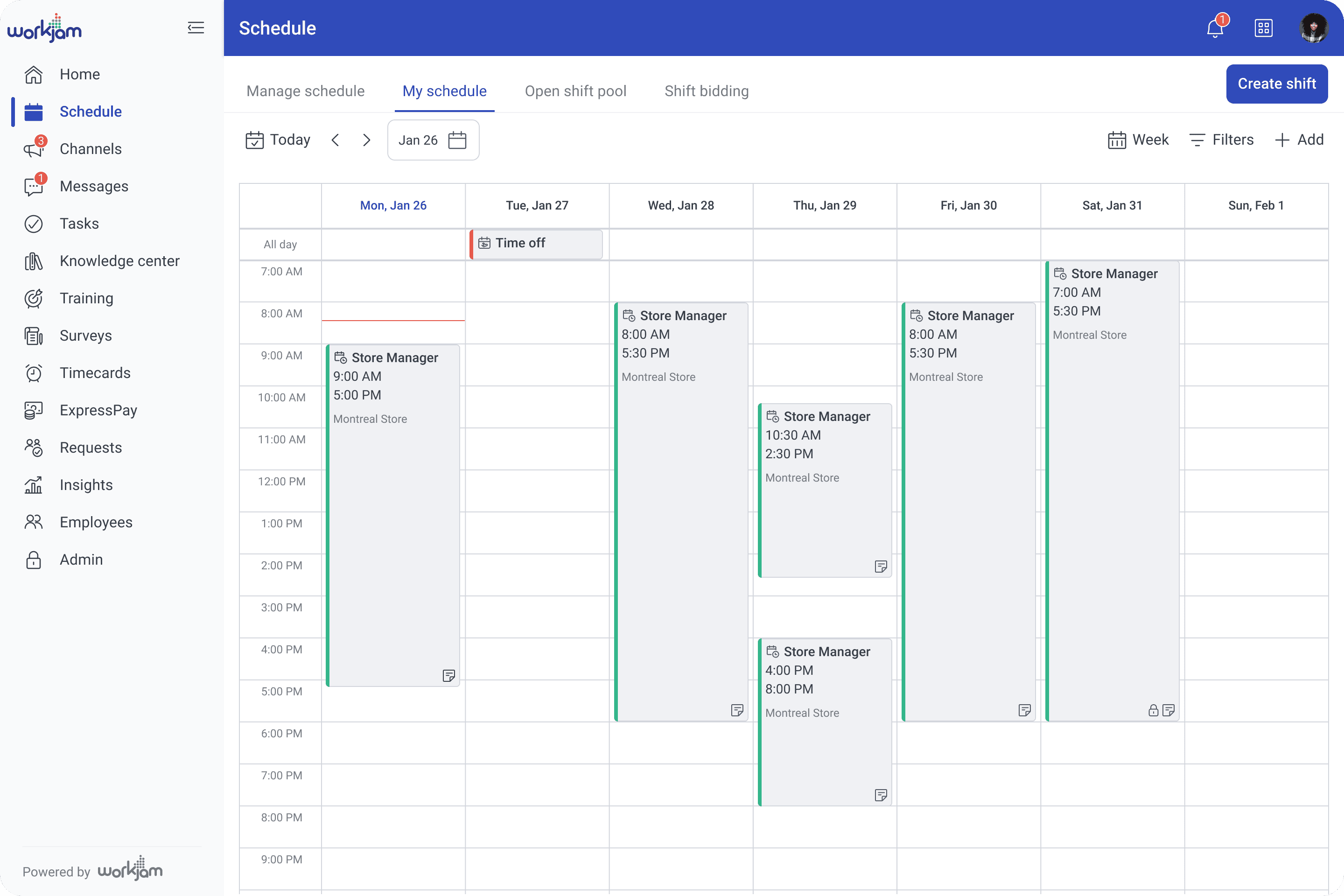
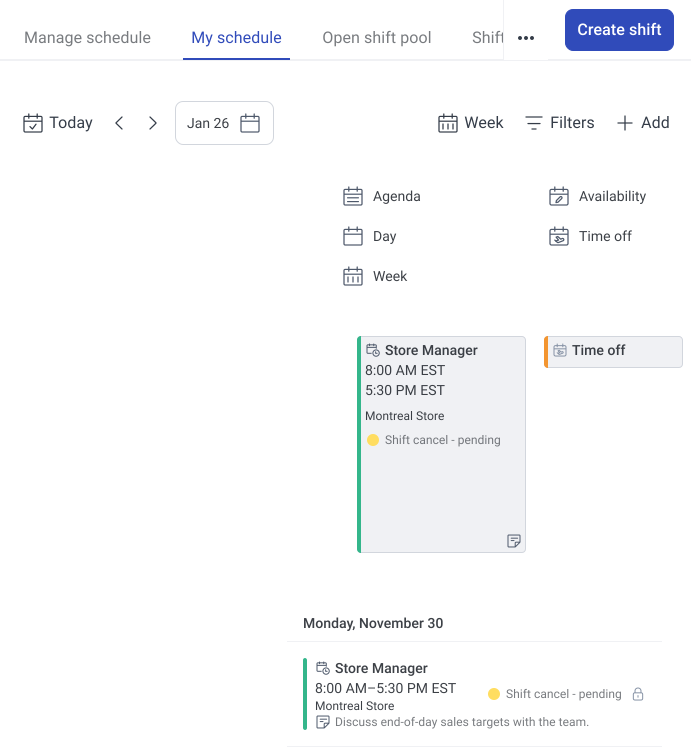
The goal was to make scheduling feel effortless. I restructured the interface with a cleaner visual hierarchy, grouping related actions and reducing visual noise.
The redesigned layout helps users understand shift data instantly, improving readability and reducing cognitive load.
Key improvements included:
Streamlined navigation and simpler action flows.
Clearer visual differentiation between shifts, breaks, and availability.
Improved use of space and contrast for faster scannability.
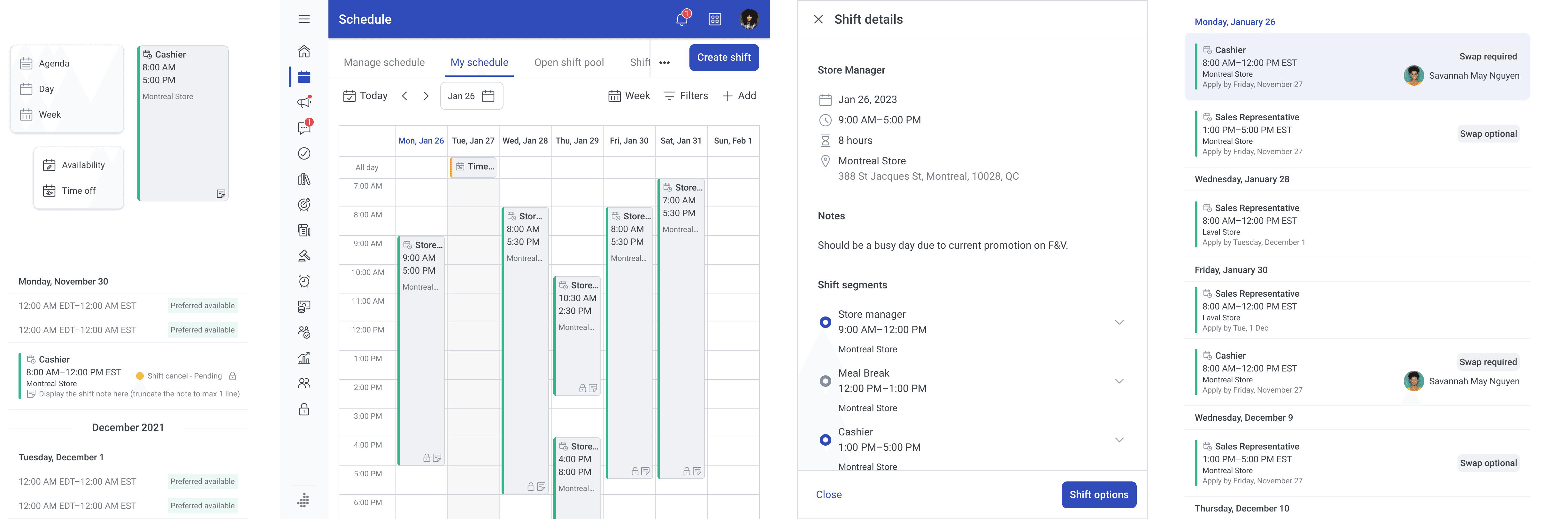
The previous version of the Schedule was desktop-only, which limited flexibility for managers and employees on the go. I worked closely with the development team to implement a fully responsive design, ensuring a consistent experience across laptops, tablets, and smartphones.
This redesign empowered users to access, edit, and manage schedules seamlessly—no matter the device they used.
Key aspects of the responsive design included:
Adaptive grid layouts that reorganize content intelligently.
Scalable components designed to remain readable at any size.
Touch-friendly interactions for mobile scheduling.
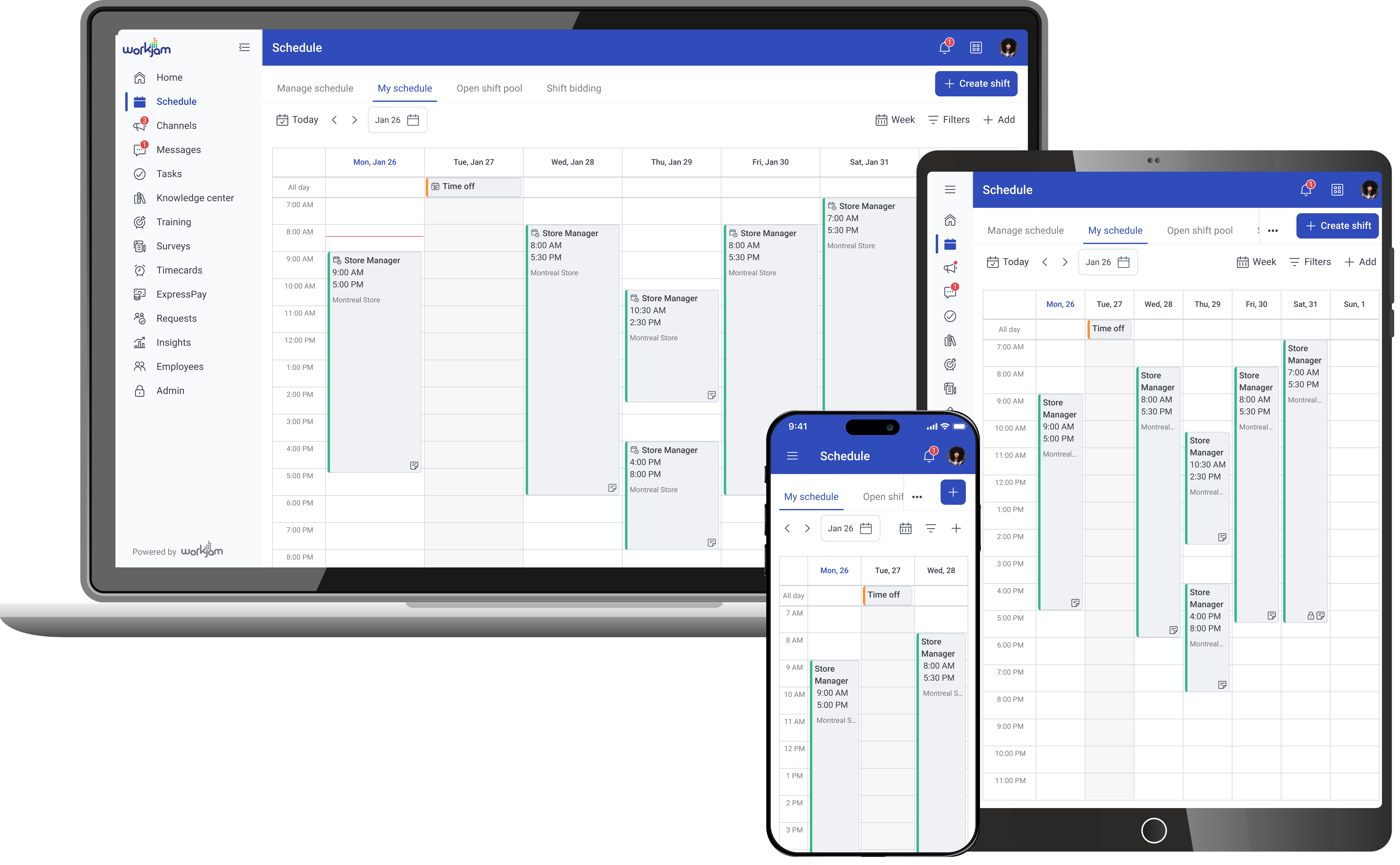
Accessibility was a top priority. Every color, label, and interaction was tested to ensure the Schedule could be used effectively by all users, regardless of ability.
By designing with accessibility from the start, we created an inclusive experience that allows everyone to engage with WorkJam confidently and efficiently.
We established new contrast ratios, added keyboard navigation support, and ensured all interactive elements met WCAG standards.

Throughout the redesign, I collaborated closely with the PO, PM, and engineering teams to align on priorities, validate design decisions, and ensure smooth handoff. Regular design reviews and user feedback sessions helped us iterate quickly and maintain alignment across teams.
Collaboration was at the heart of this project. Our close cross-functional process turned design insights into real product impact.
The outcome was a Schedule module that’s intuitive, responsive, and accessible built to scale as WorkJam continues to evolve.